Pelletizing is one stage in a feed production line. Before choosing a pellet mill, buyers need to match the machine to the required production range, feed formulation, upstream grinding and mixing stages, and downstream cooling, screening or conveying arrangements. This guide summarizes the information published for QIYU’s SZLH Series Pellet Mill and the questions to resolve during project planning.
What the SZLH series pellet mill does
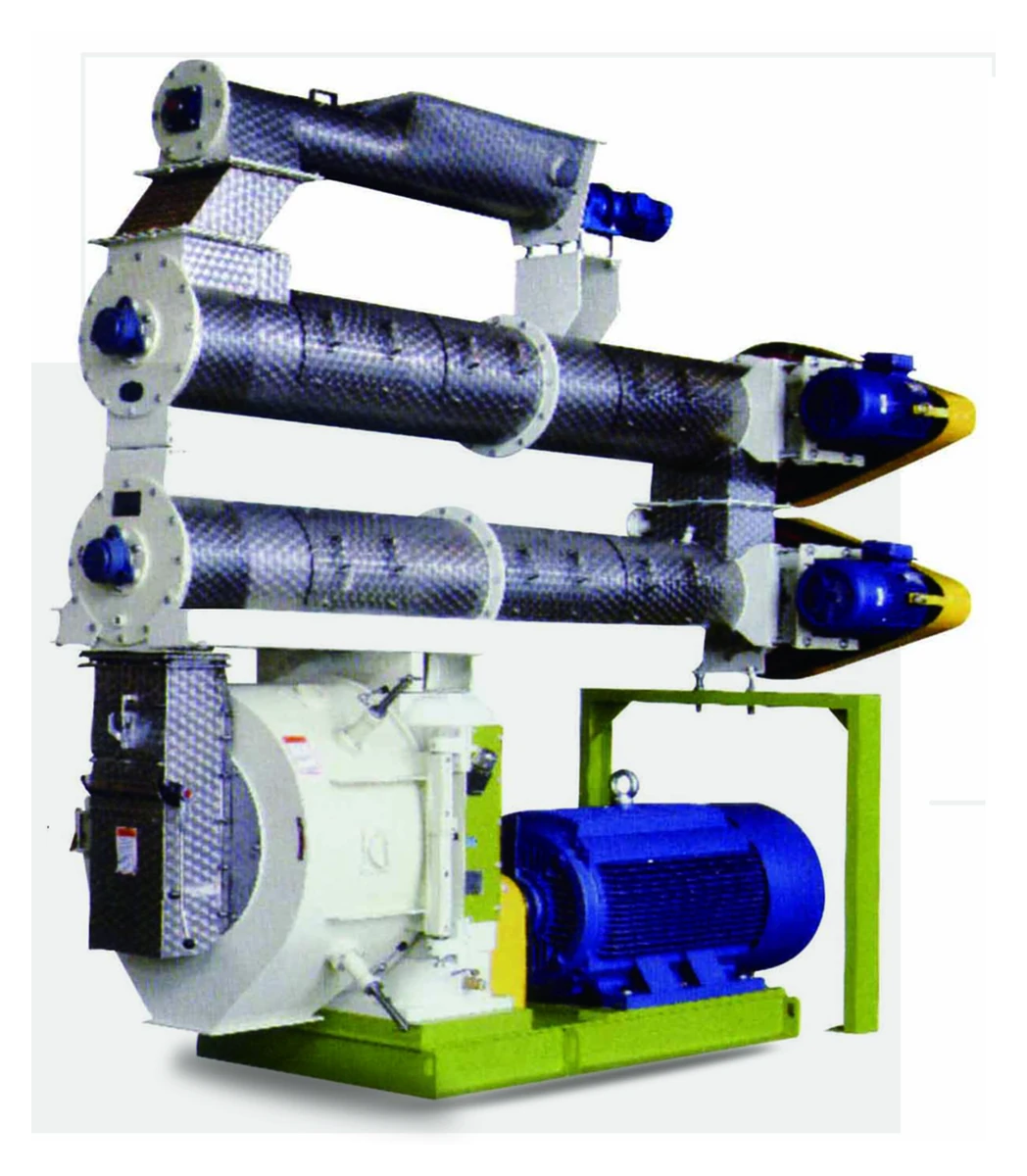
The SZLH series uses a ring-die pelleting system with a feeder, conditioner and pelleting chamber. Prepared material is fed into the machine and formed into pellets through the ring-die system. The product page describes stainless steel feed-contact components and a ring-die lifting mechanism. The mill should be considered as part of a configured process; the complete line depends on the selected raw materials and finished-feed requirements.
Published model and power options
The current product information lists five model and power combinations with an associated capacity range:
| Model | Power (kW) | Published capacity range |
|---|---|---|
| SZLH250 | 22 | 1–1.5 |
| SZLH304 | 30 | 1.5–2 |
| SZLH320 | 37 | 2–3 |
| SZLH350 | 55 | 3–5 |
| SZLH420 | 110 | 6–8 |
The published table does not specify the capacity unit or the production conditions for these figures. Confirm the unit, feed formulation, moisture, pellet specification and operating assumptions with QIYU before comparing models or treating a range as a guaranteed output.
Product features described by QIYU
- A stainless steel ring die is precision machined and vacuum heat treated for a smooth die-hole finish.
- An alloy-steel forged main shaft is specified.
- The hollow shaft is cast steel, with hardened gear teeth.
- The feeder, conditioner and pelleting chamber use stainless steel; the cutter is fitted with cemented carbide.
- A lubrication pipe allows the rollers and bearings to be lubricated during operation.
- A ring-die lifting mechanism is provided for handling the die.
These are the construction and configuration details stated on the product page. Buyers should confirm the final bill of materials, die specification, applicable feed recipe and included accessories in the quotation and order documents.
Check the rest of the process before sizing the mill
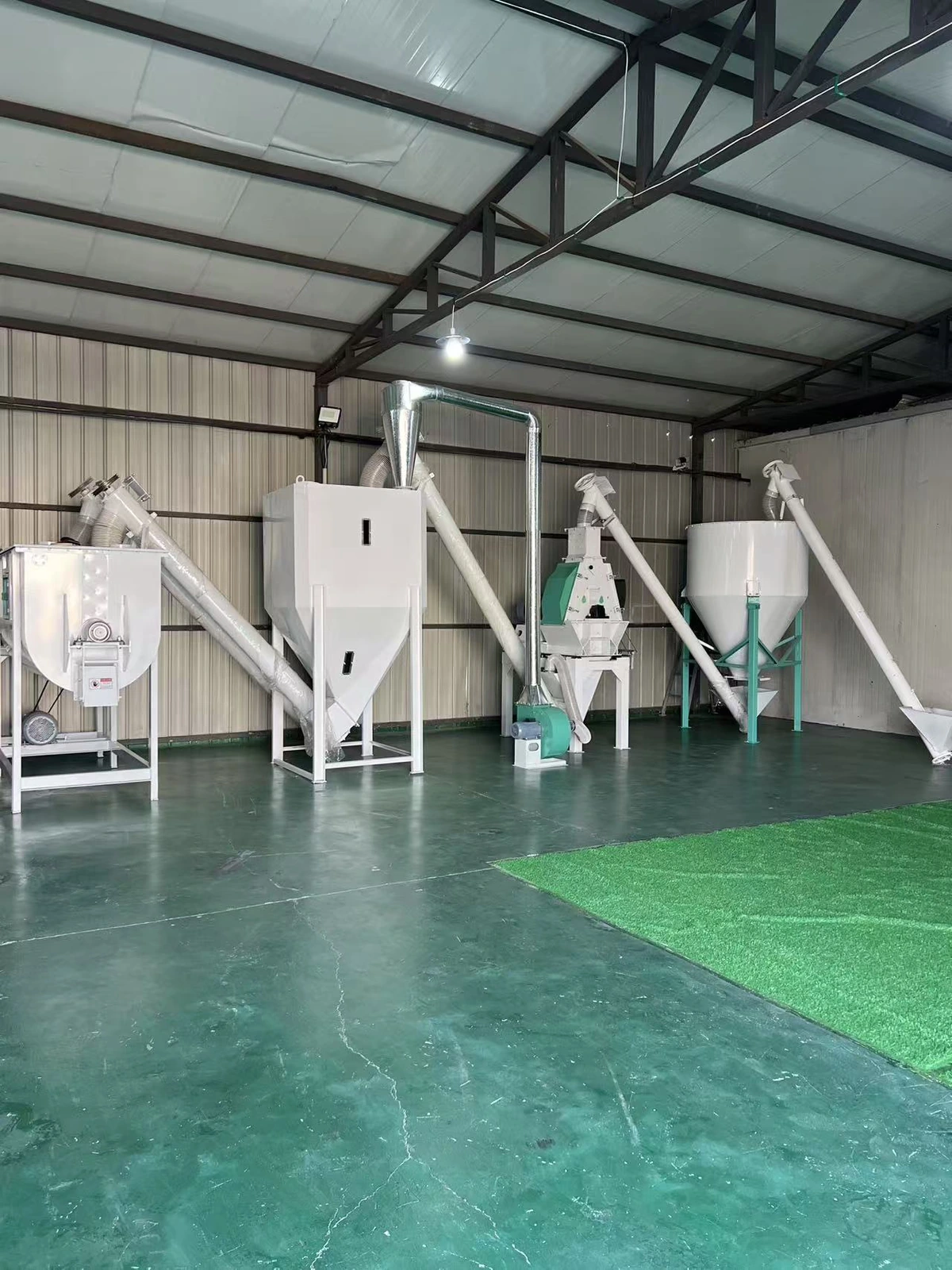
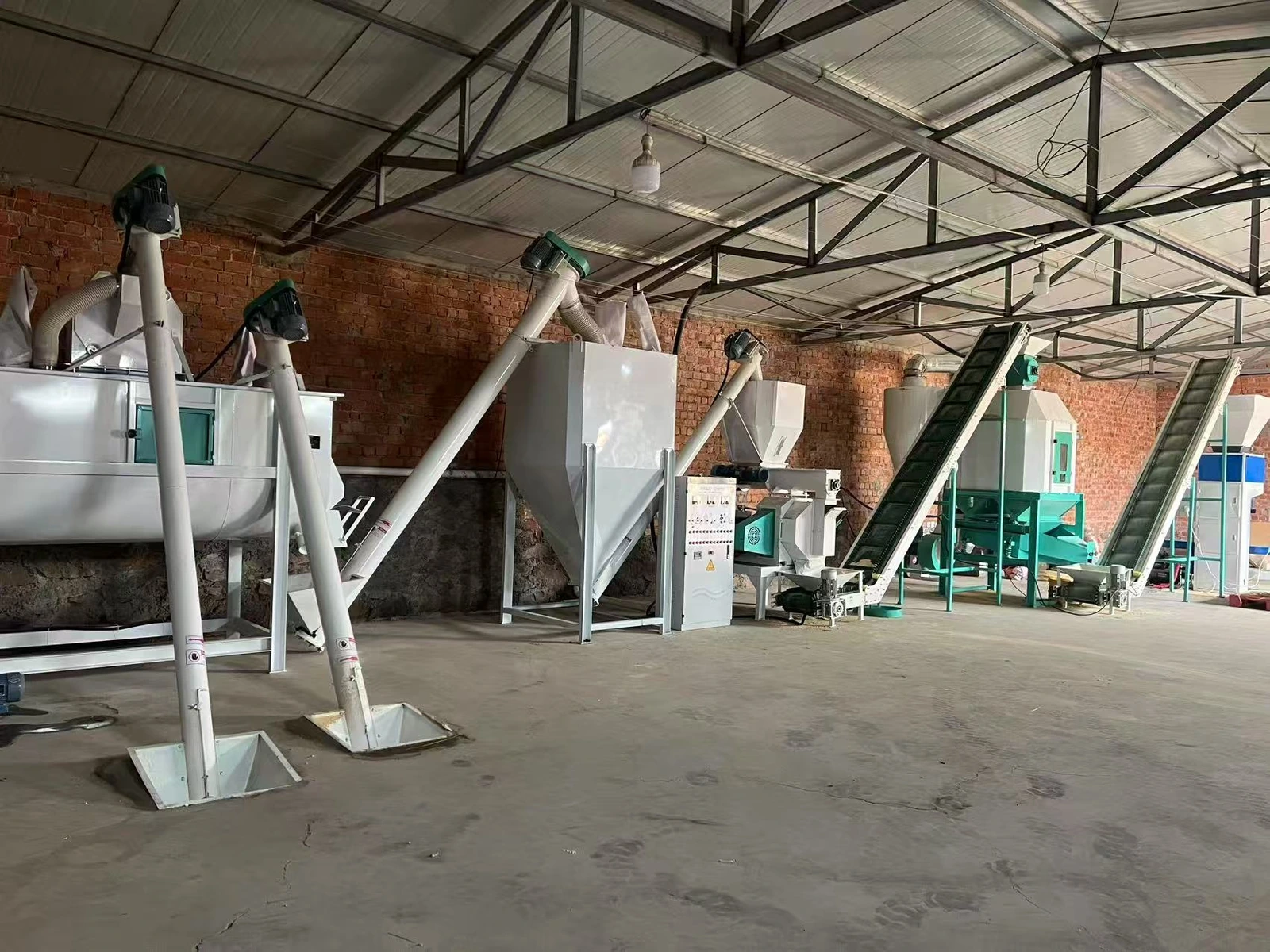
A pellet mill needs a consistent supply of prepared material. Where a project includes in-house feed preparation, grinding and mixing equipment upstream should be selected for the intended ingredients and batch workflow. The factory photographs below show grain storage and feed-processing equipment; they illustrate a wider production setting and are not photographs of the SZLH pellet mill itself.
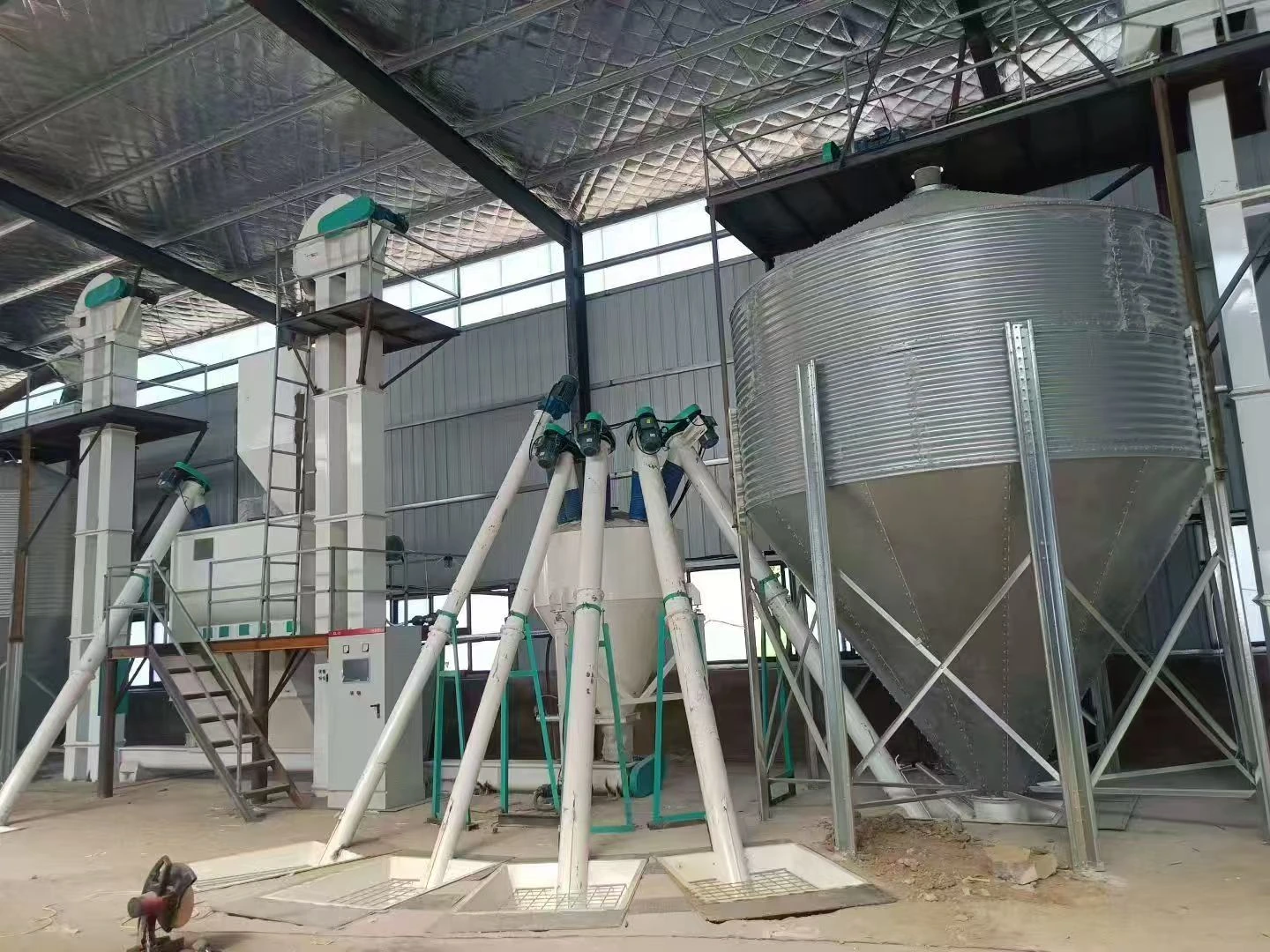
After pelleting, the line may need suitable pellet handling and any required cooling, screening, storage or packing equipment. The exact sequence and equipment list depend on product specifications and the project scope. Coordinate rated capacities across every stage so the pellet mill is not selected without considering material supply and finished-product handling.
Information to prepare for a quotation
To discuss a suitable configuration, share the raw material types and formulation, target pellet size and intended use, required output and its unit, expected operating hours, available installation space, and the upstream and downstream machines already selected. Ask the supplier to confirm capacity assumptions, electrical requirements, die and roller configuration, included equipment, installation scope and maintenance recommendations in writing.
If the project also needs coordinated grinding and mixing, review the feed grinding and mixing unit. To discuss the SZLH series directly, contact QIYU with your production requirements.